

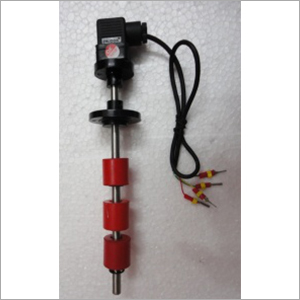
Three Level Fuel Sensors
950.00 INR/Unit
Product Details:
- IP Rating IP67
- Power Consumption <2W
- Features Rugged construction, maintenance free, corrosion resistant
- Wireless No
- Cable Length 1.5 meters (standard), customizable
- Measurement Range Customizable to tank size
- Signal Type Discrete
- Click to view more
X
Three Level Fuel Sensors Price And Quantity
- 950.00 INR/Unit
- 850.00 - 980.00 INR/Unit
- 1 Unit
- Negligible within rated temp range
- Factory calibrated for three preset levels
- > 5 years under normal conditions
- Silver (probe body), black (head)
- <10 A
- Surge and reverse polarity protection
- Works with metal and plastic tanks
- No regular maintenance required
- Enhanced for mobile tank applications
- Industrial grade, weatherproof terminal
- User manual included
Three Level Fuel Sensors Product Specifications
- Direct Immersion
- Diesel Generator, Vehicle Fuel Tanks, Storage Tanks
- Approx. 350 grams
- Relay/PLC compatible
- High (Detects three fuel stages)
- Three Level Fuel Sensors
- <2 seconds
- -20C to +70C
- 1% of Full Scale
- Top Flange (Screw or Bolt) Mounting
- Capacitive / Reed Switch-based
- Industrial and Commercial Fuel Tanks
- 3 discrete level outputs
- IP67
- <2W
- Rugged construction, maintenance free, corrosion resistant
- No
- Customizable to tank size
- 1.5 meters (standard), customizable
- Digital / Relay output
- Stainless Steel / High Grade Plastic
- 12V / 24V DC
- Measures fuel level at three distinct levels
- Discrete
- Negligible within rated temp range
- Factory calibrated for three preset levels
- > 5 years under normal conditions
- Silver (probe body), black (head)
- <10 A
- Surge and reverse polarity protection
- Works with metal and plastic tanks
- No regular maintenance required
- Enhanced for mobile tank applications
- Industrial grade, weatherproof terminal
- User manual included
Three Level Fuel Sensors Trade Information
- 1 Unit Per Day
- 1 Days
Product Description
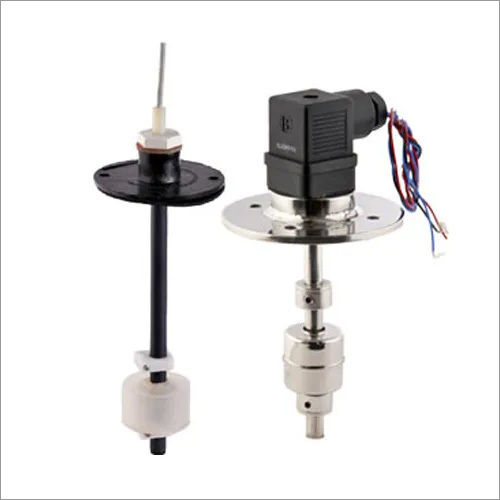
Three Level Fuel Sensors are applicable for the sector of automobiles and are made to indicate fuel level. These are utilized to measure level of fuel such as discrete resistors, capacitive, resistive film, and ultrasonic. These are commonly suited for several applications. They are mechanically connected to the float switches. Three Level Fuel Sensors are utilized as the resistor-based solutions. They can deal with the wear and tear and can ensure reduction in the service life of sensor.
Product details
Type | Fuel Level Sensor |
Material | Metal |
Certification | CE Certified |
Application | Fuel Levelling |
Weight | 300-500gm |
Color | Mulit Colour |
Voltage | 15-30VDC |
Frequency | 60Hz |
Driven Type | Electric |
Durable and Maintenance-Free Design
The Three Level Fuel Sensor boasts a rugged construction using stainless steel and high-grade plastic, delivering superior resistance to corrosion and harsh environmental conditions. Coupled with surge and reverse polarity protection, and a weatherproof terminal, this sensor is engineered for exceptional durability. Maintenance is streamlined, as no regular servicing is required throughout its operational life, ensuring reliable, long-term performance for industrial and commercial fuel management.
Unmatched Accuracy and Sensitivity
Factory-calibrated for three discrete fuel levels, the sensor offers an impressive accuracy of 1% of full scale and high sensitivity, detecting fuel stages swiftly with a response time under 2 seconds. Its negligible temperature drift and enhanced vibration resistance make it ideal for mobile and stationary applications. Designed for use in a wide range of temperatures (-20C to +70C), it ensures consistent results even in fluctuating environments.
Easy Installation and Custom Solutions
Featuring top flange mounting support (screw or bolt), the sensor is quick to install in a variety of tank types, with a user manual provided for step-by-step guidance. The measurement range and cable length can be customized to meet unique tank configurations, allowing for flexible integration into industrial and commercial set-ups. Sensor outputs are compatible with relay and PLC systems, supporting modern automated fuel monitoring solutions.
FAQs of Three Level Fuel Sensors:
Q: How does the Three Level Fuel Sensor determine fuel quantity in different tank types?
A: The sensor utilizes either capacitive or reed switch-based technology to precisely detect and relay which of the three preset fuel levels is present, regardless of whether it is installed in a metal or plastic tank. Its factory calibration ensures dependable readouts tailored for industrial and commercial tanks.Q: What is the process for installing the fuel sensor, and is professional assistance required?
A: Installation is designed to be user-friendly using a top flange (screw or bolt) mounting system. Each sensor includes a comprehensive user manual, making it possible for competent technical personnel to install without the need for extensive professional support.Q: Where can this fuel sensor be utilized effectively?
A: This sensor is suitable for industrial and commercial environments, including diesel generators, vehicle fuel tanks, and storage tanks. Its weatherproof design and rugged construction allow it to perform reliably in both stationary and mobile settings.Q: What maintenance does the sensor require during its lifecycle?
A: Routine maintenance is not necessary, as the sensor is engineered to be maintenance-free under normal operating conditions. This not only reduces operational overhead but also minimizes potential downtime.Q: What are the primary benefits of using this sensor in fuel management?
A: Key advantages include accurate measurement of three distinct fuel levels, high reliability under vibration and environmental extremes, seamless PLC and relay compatibility, and long-term service with minimal intervention. These features support efficient fuel monitoring and automation.Q: When should the sensor be considered for replacement or recalibration?
A: Under normal conditions, the sensor offers a service life exceeding five years. Replacement or recalibration should only be considered if performance indicators suggest deviation from the specified accuracy or response time.Q: How does this sensor protect against electrical faults and environmental exposure?
A: The sensor comes equipped with surge and reverse polarity protection, IP67-rated ingress protection for dust and water, and materials designed to resist corrosion, ensuring its operation remains stable in challenging industrial and outdoor environments.Tell us about your requirement

Price:
Quantity
Select Unit
- 50
- 100
- 200
- 250
- 500
- 1000+
Additional detail
Mobile number
Email

Other Products in 'Fuel Sensors' category

Contact Details

- First Floor, A-3, DSIDC Industrial Complex , Block - A, Jhilmil Colony,Delhi - 110095, India
- Phone : 08045812880
J. K. Instruments Co
GST : 07BJKPS7310F1Z4
GST : 07BJKPS7310F1Z4

- Mr Ajit Pal Singh (Proprietor )
- Mobile : 08045812880
- Send Inquiry
- Mr. Ajit Singh Chauhan (M.D)
Mobile :+919868359572
 Send Inquiry
|


 Send Inquiry
 Send SMS
J. K. INSTRUMENTS CO
All Rights Reserved.(Terms of Use)
Developed and Managed by Infocom Network Private Limited.
Developed and Managed by Infocom Network Private Limited.
